

Vitamin B1 Mononitrate is a water-soluble essential nutrient that all bodily tissues need to function. Thiamine has the designation as vitamin B1 because it was the first B vitamin that scientists discovered. It is necessary to generate adenosine triphosphate (ATP) molecules. These molecules are responsible for transferring energy between cells. It is also a cofactor for several enzymes that help metabolize glucose, amino acids, and lipids.
WHAT CAUSES THIAMINE DEFICIENCY?
Thiamine deficiency can occur for several reasons. The most common risk factors include:
- Drinking a lot of coffee or tea, including decaf
- Frequently eating raw fish and shellfish
- Aging
- Weight loss surgery
- Having diabetes
- Eating disorders
- Dialysis
- A diet high in rice or grains that lack thiamine
- High doses of diuretics
- Lon-term alcohol misuse
- Conditions that prevent the absorption or cause excess excretion of thiamine
THIAMINE DEFICIENCY SYMPTOMS
Identifying a thiamine deficiency can be challenging, as many of the symptoms are unspecific or appear similar to other health concerns. The following are some of the signs of a thiamine deficiency:
- Loss of appetite. Thiamine sends signals to the brain to indicate hunger and fullness. Insufficient thiamine can disrupt this process and cause individuals to feel full even when they’re not. Not eating enough can lead to other nutrient deficiencies as well, as the individual isn’t consuming enough from food. A sudden loss of appetite is one of the earliest indicators of a thiamine deficiency.
- Unintentional weight loss. Not feeling hungry can cause unintentional weight loss. Losing weight without meaning to can cause several health problems, particularly if the individual drops below a healthy weight.
- Neuropathy. Neuropathy secondary to a thiamine deficiency was the first deficiency syndrome identified in humans. It is also the most recognized symptom of a thiamine deficiency. It can present as tingling in the extremities, loss of coordination, and desensitized hands and feet. It typically starts as a pins and needles sensation before more severe neuropathy symptoms begin.
- Fatigue. A thiamine deficiency can cause excessive tiredness within a few weeks from the onset. Thiamine plays a critical role in energy production. When the body has less thiamine to work with, it doesn’t have enough energy to perform all its functions well.
- Cognitive problems. Thiamine deficiency can cause confusion and brain fog. It can also make it difficult to think clearly. Severe deficiencies can cause hallucinations and memory loss.
Usage/Directions:
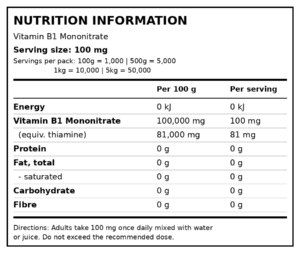
- Recommended Use: Adults: take 100 mg once daily mixed with water or juice, or as directed by your healthcare professional. Do not exceed the recommended dose.
- Serving Suggestions: Combine with other B-complex vitamins in a smoothie or juice for enhanced energy support.
Nutritional Information
POTENTIAL THIAMINE SIDE EFFECTS
Thiamine is water-soluble, and the body excretes any excess it does not need. However, individuals with a thiamine sensitivity may experience flushing, nausea, itching, or hives. Individuals should consult with a doctor before taking any new supplements.




Reviews
There are no reviews yet.